
How to Travel with Your Dog Without the Chaos
A dog who handles hotel rooms, new cities, and unfamiliar routines with composure did not get there by accident. Travel readiness is socialization readiness, and it starts well before you pack a bag.
Why Socialization Is the Real Travel Prep
Travel throws every kind of novelty at your dog in rapid succession: new surfaces, new sounds, new smells, unfamiliar people, different sleeping arrangements, and a disrupted routine. A dog who has been systematically exposed to novel environments through structured socialization has a framework for processing all of this. They have learned that new does not mean dangerous. A dog who has not had that exposure treats every unfamiliar element as a potential threat, and a hotel room has dozens of them.
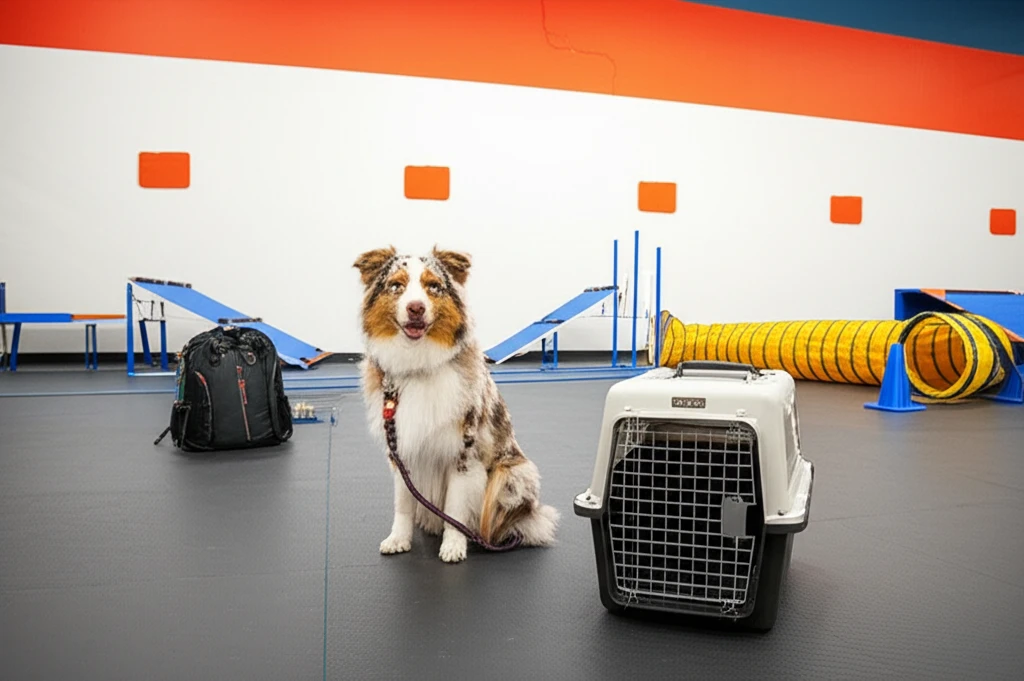
This is why the best time to prepare your dog for travel is months before the trip. The specific skills you need, like a reliable settle, loose-leash walking in new environments, and calm behavior around strangers, are all downstream of broader socialization work. If your dog is comfortable in an indoor training gym with other dogs and handlers around, they have already practiced the core competency that travel demands: staying regulated in an unfamiliar space.
Hotel Etiquette That Actually Matters
Pet-friendly hotels tolerate dogs. Your job is to make them glad they do. The non-negotiable skill here is quiet settle behavior, because a dog who barks when you step into the hallway for ice will generate complaints fast. If your dog has any degree of separation anxiety, practice brief departures in unfamiliar rooms before relying on it during a trip. Rent an Airbnb for a night locally and practice leaving and returning.
Bring your dog's own bedding, a familiar blanket, and a crate if your dog is crate-trained. Familiar scents in an unfamiliar room give your dog an anchor. Cover surfaces you are worried about. Assume nothing in the room is dog-proof. Pick up the trash can, move the complimentary snacks off the nightstand, and check for anything chewable at nose level.
Walk your dog before entering the hotel so they are not bursting with energy in the lobby. Use the side entrance if one exists. Keep your dog on a short leash in hallways and elevators, and do not let them greet other guests unless invited. Not everyone in a hotel is a dog person, and respecting that is what keeps hotels pet-friendly.
Planning the Trip Around Your Dog's Needs
The biggest planning mistake is treating your dog as a luggage item who will simply be present during a human vacation. Your dog needs exercise, bathroom breaks, mental stimulation, and downtime, and travel schedules rarely account for any of those naturally. Build dog-specific stops into your itinerary. Research parks, walking trails, and pet-friendly restaurants at your destination before you leave.
If you are flying with your dog, the logistics start weeks before departure with carrier training, airline requirements, and booking. If you are driving, plan rest stops every two to three hours and bring enough water for the entire drive. Either way, pack a go-bag with your dog's food, medications, vet records, a first-aid kit, waste bags, and a recent photo in case your dog gets separated from you.
Consider your dog's temperament honestly. A dog who thrives on routine and gets stressed by change may genuinely be happier with a trusted pet sitter at home than in a hotel room in a new city. Bringing your dog should enhance the trip for both of you, not create a management problem that overshadows it.
Navigating New Environments on the Ground
The first walk in a new city is the moment of truth. Your dog is processing unfamiliar sidewalks, different traffic patterns, new dogs, and a completely novel scent landscape all at once. If your dog has solid recall and loose-leash skills, this is exciting for both of you. If those skills are shaky at home, they will be nonexistent in a new environment.
Give your dog time to acclimate. Spend the first 15 minutes of arrival doing a slow, low-pressure walk around the immediate area rather than heading straight into a busy downtown. Let your dog sniff. Sniffing is how dogs gather information about an environment, and it is calming. A dog who has been allowed to investigate a new neighborhood at their own pace settles into it faster than one who was rushed through it.
Watch for signs of overstimulation: excessive panting, hypervigilance, inability to take treats, or pulling in every direction. These mean your dog needs a break in a quieter spot, not more exposure. Manage their energy throughout the day by alternating stimulation with genuine rest.
Making Travel a Repeatable Part of Your Life
The first trip with your dog is the hardest. You will overpack, underestimate transition time, and probably deal with at least one moment where you question the entire decision. That is normal. What matters is that each trip builds your dog's experience base. A dog who has stayed in one hotel room handles the second one better. A dog who has navigated one airport is calmer at the next.
This compounding effect is exactly how socialization works at every level. Exposure to managed novelty builds resilience, which makes the next novel situation easier, which opens up more of the world to you and your dog. The same dog who can settle under a restaurant table and walk calmly through a busy store is the dog who handles travel well. These are not separate skills. They are all expressions of the same underlying confidence that comes from structured socialization work. Find a Zoom Room near you to start building the foundation that makes travel with your dog genuinely enjoyable.
Frequently Asked Questions
At what age can I start traveling with my dog?
You can start short trips once your dog has completed their core vaccinations, typically around 16 weeks, and has basic obedience skills like settle and loose-leash walking. However, age matters less than readiness. A two-year-old dog who has never left the neighborhood is not prepared for a cross-country trip. Start with short overnight stays close to home to gauge how your dog handles disrupted routines, unfamiliar rooms, and new environments before committing to longer or more complex travel.
How do I find genuinely pet-friendly hotels?
Look beyond the pet-friendly label and read the actual pet policy. Check weight limits, breed restrictions, per-night pet fees, refundable damage deposits, and whether dogs are allowed in common areas or restricted to the room. Hotels that welcome dogs typically have details like designated relief areas, water bowls in the lobby, and reasonable fees. Sites like BringFido aggregate this information, but always call the hotel directly to confirm current policies. Ask whether there are specific floors for pet guests and whether housekeeping will enter rooms with pets present.
What should I do if my dog gets anxious during travel?
Address travel anxiety by identifying the specific trigger. If your dog is anxious in the car, work on positive car associations separately before combining car travel with the stress of a new destination. If the anxiety appears in the hotel room, the issue is likely unfamiliar environments, and you need more socialization groundwork. In the moment, provide your dog with familiar items like their bed and a worn shirt of yours, use calming enrichment like a stuffed Kong, and give them a quiet space to decompress. If anxiety is severe, consult your veterinarian about situational support before the trip rather than during it.
Ready to See More of the World Together?
Zoom Room's socialization and obedience classes build the environmental confidence and impulse control your dog needs to be a great travel companion. You train alongside your dog in a controlled indoor gym.
Find a Zoom Room