
How to Run Errands with Your Dog Like It Is No Big Deal
Walking through a Home Depot with a dog who holds a loose leash, ignores the forklift backing up in aisle seven, and sits politely while you wait in the checkout line is socialization in action. It is also one of the most practical training environments you have access to.
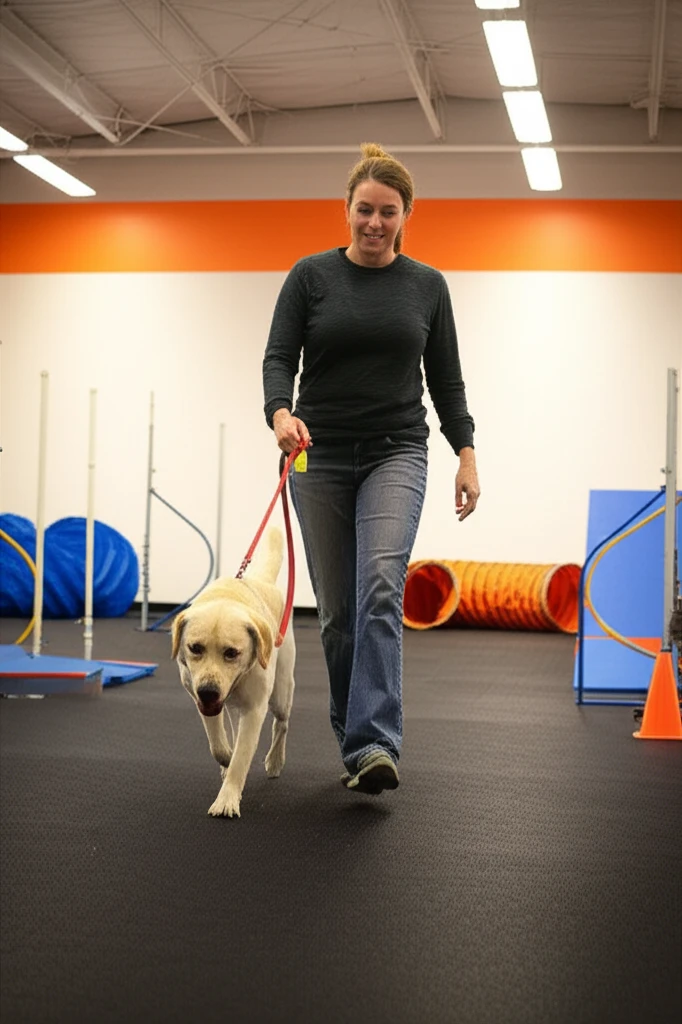
The Errands Test: What It Actually Measures
Taking your dog into a store combines nearly every socialization and obedience skill into a single outing. Your dog has to walk on a loose leash on unfamiliar flooring. They have to ignore food on shelves at nose level. They have to remain calm around shopping carts, forklifts, announcements over the PA system, and strangers who want to pet them. They have to wait patiently while you stop to look at something or stand in line. And they have to do all of this in a novel environment that changes every time you visit.
This is why errands are such a useful benchmark. If your dog can handle a busy store, they are demonstrating environmental confidence, impulse control, loose-leash skills, and the ability to disengage from distractions. These are the same skills that make restaurant patios, travel, and office visits possible. It all connects.
Start with Quiet Stores, Build to Busy Ones
Do not take a dog who has never been inside a store and walk them into a crowded Costco on a Saturday afternoon. Start with a quiet, low-traffic store during off-peak hours. Hardware stores on a Tuesday morning, a pet supply store right when it opens, or a garden center with wide aisles and few shoppers. Your goal on the first visit is not to shop. It is to give your dog a positive experience in a retail environment.
Walk the perimeter of the store at your dog's pace. Let them sniff. Reward calm, loose-leash walking with treats. If your dog pulls, stop, wait for a loose leash, and then continue. If they seem overwhelmed by a particular aisle or stimulus, calmly redirect and walk to a quieter area. You are building a positive association with the store itself, not drilling obedience behaviors under pressure.
Over several visits, gradually increase the difficulty: go during slightly busier times, walk down narrower aisles, practice sits near the register, and expose your dog to the specific sounds and movements of that environment. A dog with solid early socialization will progress through these stages faster because they already have a baseline comfort with novelty.
Loose Leash and Impulse Control in the Real World
The two skills that matter most in a store are loose-leash walking and impulse control, and they are tested constantly. Every dropped pretzel, every passing shopper with a cart full of dog treats, every toddler at eye level is a temptation or a trigger. Your dog's response to each one reflects how solid their training foundation is.
Loose-leash walking in a store is harder than on a sidewalk because the environment is more stimulating and the space is more confined. Practice at home first, then on quiet streets, then in parking lots before attempting store aisles. Use a standard six-foot leash, not a retractable. Retractables teach your dog that pulling gets them more distance, which is the opposite of what you want.
Impulse control around food and merchandise comes from positive reinforcement training that rewards disengagement. When your dog looks at something tempting and then looks back at you, that is the behavior you reward. Over time, checking in with you becomes the default response to interesting stimuli, not lunging toward it. If your dog is still struggling with reactivity on leash, work on that in lower-stimulation environments before adding the complexity of a store.
Handling People Who Want to Pet Your Dog
In a pet-friendly store, people will approach your dog. Some will ask, and some will reach out without asking. You are your dog's advocate in these situations. It is completely appropriate to say "he's in training right now" or "she's not available for petting" if the timing is not right. You do not owe strangers access to your dog.
If you do allow a greeting, use it as a training opportunity. Ask your dog for a sit before the person approaches. If your dog holds the sit, the greeting continues. If they jump up, the person steps back and you reset. This turns every stranger encounter into a real-world repetition of the greeting behavior you want. It is more effective than any amount of practice with people your dog already knows because the excitement of a novel person is the actual test.
Watch your dog's body language during greetings. A loose, wiggly body and soft eyes indicate your dog is enjoying the interaction. A stiff body, whale eyes, lip licking, or turning away mean your dog wants space. Advocate for your dog by politely ending the greeting if you see stress signals, even if the person says "it's fine, dogs love me."
Making Errands Part of Your Training Routine
Pet-friendly stores are free training environments with built-in distractions. Treat them that way. Instead of only bringing your dog when you actually need to buy something, make short training visits part of your weekly routine. A 15-minute walk through a hardware store twice a week builds more real-world reliability than an hour of practicing commands in your backyard.
Use specific aisles to work on specific skills. The lumber section with wide, quiet aisles is good for loose-leash fundamentals. The checkout area with lines and noise is good for extended sits and patience. The garden section with outdoor sounds and smells is good for recall practice on a long line. The entrance where automatic doors open and close builds environmental confidence.
Track your dog's progress by noticing what changes over time. The first visit might be ten minutes of barely controlled chaos. By the fifth visit, your dog walks past the treat aisle without pulling. By the tenth, they lie down and wait while you chat with a cashier. That progression is exactly how socialization works: repeated positive exposure in managed increments that build genuine confidence. Find a Zoom Room near you to build the foundation skills that make running errands with your dog something you actually look forward to.
Frequently Asked Questions
Which stores allow dogs?
Most hardware stores including Home Depot, Lowe's, and Ace Hardware are widely dog-friendly, though policies can vary by location. Pet supply stores like Petco and PetSmart welcome dogs. Some outdoor retailers like REI, Bass Pro Shops, and Cabela's allow dogs. Apple stores, Nordstrom, and TJ Maxx are often dog-friendly as well. Grocery stores and restaurants with indoor dining generally do not allow dogs due to health codes. Always check with the specific location before bringing your dog, as corporate policy and individual store management can differ.
What should I do if my dog has an accident in a store?
Clean it up immediately and notify a store employee so the area can be properly sanitized. Carry waste bags and paper towels with you on every store visit. An accident usually means your dog was inside too long without a break or was too stressed to signal that they needed to go out. Prevent future incidents by giving your dog a thorough bathroom break before entering any store and keeping early visits short. If accidents happen repeatedly indoors despite recent bathroom breaks, your dog may be stress-eliminating, which means the store environment is too overwhelming for their current comfort level.
How old does my dog need to be to go into stores?
Your dog should be fully vaccinated before walking on floors where other dogs have been, which means waiting until about 16 weeks of age after the final round of puppy vaccinations. That said, you can carry a young puppy through stores before that age for socialization exposure without letting them walk on the floor. Once vaccinated, puppies benefit enormously from store visits because they are still in or near the critical socialization window where positive exposure to novel environments has the greatest impact. Start with very short visits of five to ten minutes and gradually build duration as your puppy's confidence grows.
Ready to Take Your Dog Everywhere?
Zoom Room's obedience and socialization classes build the loose-leash skills, impulse control, and environmental confidence your dog needs to be a great companion on errands and beyond. You train alongside your dog in a controlled indoor gym.
Find a Zoom Room