
How to Actually Enjoy a Restaurant Meal with Your Dog
A dog who settles quietly under a patio table while you eat a full meal is not born that way. That calm is built through specific skills, practiced in lower-stakes environments first, and it is one of the most satisfying payoffs of real socialization work.
The Skills Your Dog Needs Before the First Patio
Restaurant dining asks a lot of a dog. They need to hold a down-stay for 30 to 60 minutes on an unfamiliar surface, ignore food being served at nose level, remain calm while strangers walk past inches away, and not react to other dogs on nearby patios. That is a stack of advanced behaviors, and each one needs to be solid before you combine them in a live restaurant setting.
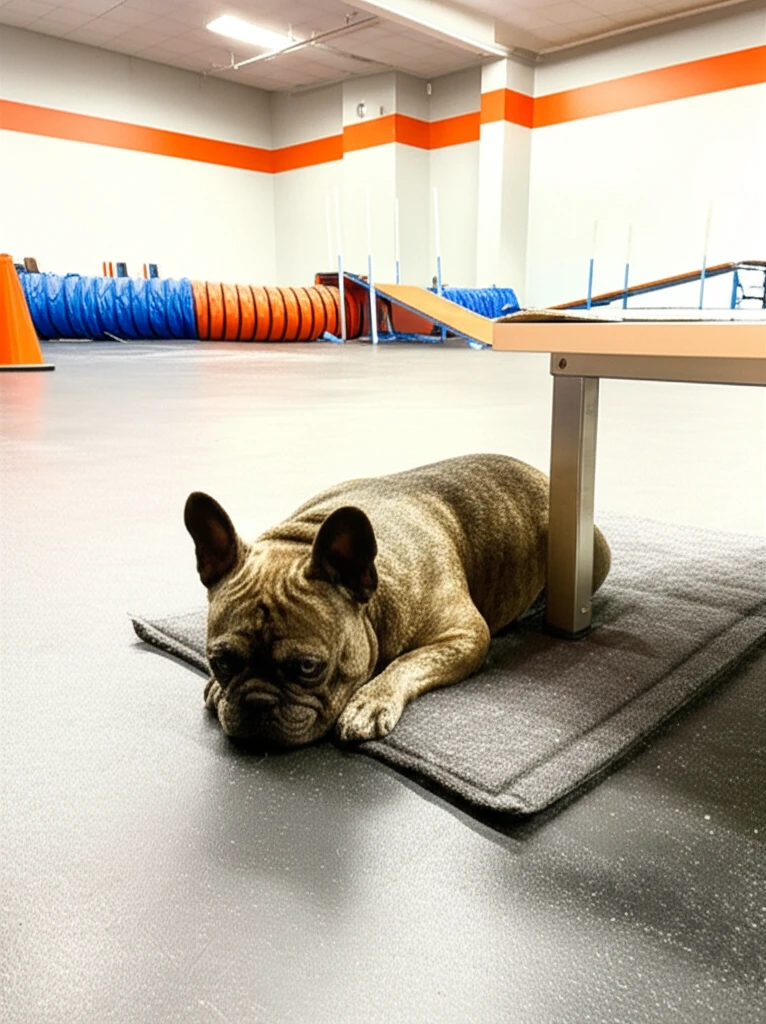
The foundation skill is a reliable "place" or "settle" cue, where your dog goes to a designated spot (usually a portable mat or blanket) and stays there calmly. This is different from a quick down-stay in your living room. You are asking for duration, distraction tolerance, and relaxation all at once. If your dog does not yet have a strong positive reinforcement foundation for settle, start there before adding restaurant-level complexity.
Build Up in Stages, Not All at Once
The biggest mistake people make is treating the first restaurant visit as a test. Instead, treat it as the final step in a progression. Start by practicing settle on a mat at home during your own meals. When your dog can hold that position for 20 minutes while you eat dinner, move to your front porch or backyard with the mat, adding mild outdoor distractions. Then try a quiet coffee shop patio where you are only there for 15 minutes. Then a casual lunch spot during off-peak hours.
Each step adds one new variable: a new surface, more foot traffic, the presence of other dogs, the smell of restaurant food. If your dog struggles at any stage, that is useful information. It means you need more repetitions at that level, not a push to the next one. A dog who has done the work of structured socialization already has a framework for processing new environments, which makes this progression faster than you might expect.
What to Do When Food Hits the Table
Dogs do not ignore food on command. They learn to ignore food because they have been reinforced for choosing to disengage from it. Practice food refusal at home first: place a treat on the ground, cover it with your hand, and reward your dog when they look away from it rather than mugging your hand. Build this into a pattern where your dog understands that not going for the food is what produces the reward.
At the restaurant, bring a stuffed Kong or long-lasting chew to give your dog something appropriate to work on during the meal. Position your dog under the table or beside your chair, not in the middle of the walkway where servers will step over them. If something drops, calmly cover it with your foot and redirect your dog back to their mat. Do not make it a dramatic correction. Dropped food will happen. Your dog's response to it is a trained behavior, not a moral failing.
Managing Other Dogs and Pedestrian Traffic
Outdoor patios put your dog in close proximity to passing dogs, strollers, children, and delivery drivers. If your dog has a history of leash reactivity, patio dining is not the right environment yet. Work on that skill specifically before combining it with the sustained impulse control that restaurant dining requires.
For dogs who are generally comfortable around other dogs and people, position matters. Choose a table at the edge of the patio rather than the center. Keep your dog on the side away from foot traffic. Bring your mat and place it where your dog has a wall or railing behind them so they do not feel exposed from all directions. These small environmental setups reduce the number of decisions your dog has to make, which lowers stress and makes it easier for them to hold their settle.
If another dog on the patio is reactive or your dog is getting overstimulated, it is perfectly fine to pay the check and leave. One shortened outing that ends on a positive note is worth more than a full meal where your dog practiced being stressed for an hour.
The Patio Test Is Really a Socialization Test
When your dog lies quietly under a restaurant table while life happens around them, you are seeing the accumulated result of every socialization experience they have had. The Canine Good Citizen test includes a supervised separation exercise for exactly this reason: it measures whether a dog can remain calm in a public setting without constant management from their handler.
This is what makes restaurant dining one of the best real-world benchmarks for your training. It combines duration, distraction, impulse control, and environmental confidence into a single scenario. If your dog can do this well, they are also likely ready for other lifestyle activities like traveling or coming to the office. If they are not there yet, that is not a failure. It is a clear picture of what to work on next. Find a Zoom Room near you to build the settle and socialization skills that make patio dining genuinely enjoyable for both of you.
Frequently Asked Questions
How long should my dog be able to hold a down-stay before I try a restaurant?
Your dog should be able to hold a relaxed down-stay for at least 20 to 30 minutes with moderate distractions before attempting a restaurant patio. This is not the same as a tense, white-knuckle stay where your dog is barely holding it together. You want a dog who settles onto their mat, takes a deep breath, and genuinely relaxes. Practice at home during meals first, then in your yard, then at a quiet outdoor cafe. If your dog can handle 30 minutes in those environments, a restaurant during off-peak hours is a reasonable next step.
What should I bring to a restaurant for my dog?
Bring a portable mat or blanket that your dog already associates with the settle cue, a stuffed Kong or long-lasting chew, a small bag of high-value treats for reinforcing calm behavior, a water bowl, and a leash that you can secure to your chair leg. The mat is the most important item because it gives your dog a clear physical boundary and a familiar surface in an unfamiliar environment. Skip the toys that squeak or bounce, and leave the retractable leash at home.
What do I do if my dog starts barking or whining at the restaurant?
Remove your dog from the situation calmly and without fuss. Walk them away from the patio to a quieter area, let them decompress, and assess whether they can return or whether it is time to leave. Do not scold or correct them for vocalizing, because the barking or whining is telling you they are over threshold. It means the environment was too much for their current skill level. That is information you can use: next time, choose a quieter restaurant, go during slower hours, or do more practice in intermediate environments before trying again.
Ready to Enjoy Patio Season Together?
Zoom Room's obedience and socialization classes build the settle skills and environmental confidence your dog needs to be a great restaurant companion. You train alongside your dog in a controlled indoor gym.
Find a Zoom Room