
How to Make Car Trips Safe and Stress-Free for Your Dog
For many dogs, the car is associated with exactly two things: the vet and the groomer. If those are your dog's only car experiences, you have accidentally trained them to dread the vehicle. Changing that association is straightforward, but it requires intention.
Safety First: How to Restrain Your Dog in the Car
An unrestrained dog in a moving car is a projectile in a collision. A 60-pound dog in a 35-mph crash generates roughly 2,700 pounds of force. That is dangerous for your dog and for every human in the vehicle. Restraint is not optional.
You have three practical options. A crash-tested crate secured in the cargo area is the safest choice, especially for larger dogs. A crash-tested harness that clips into the seatbelt system keeps your dog on the back seat and allows some movement while preventing them from becoming a projectile. A vehicle barrier separates the cargo area from the passenger compartment but does not restrain your dog within the cargo space, so it protects passengers but offers less protection to the dog in a crash.
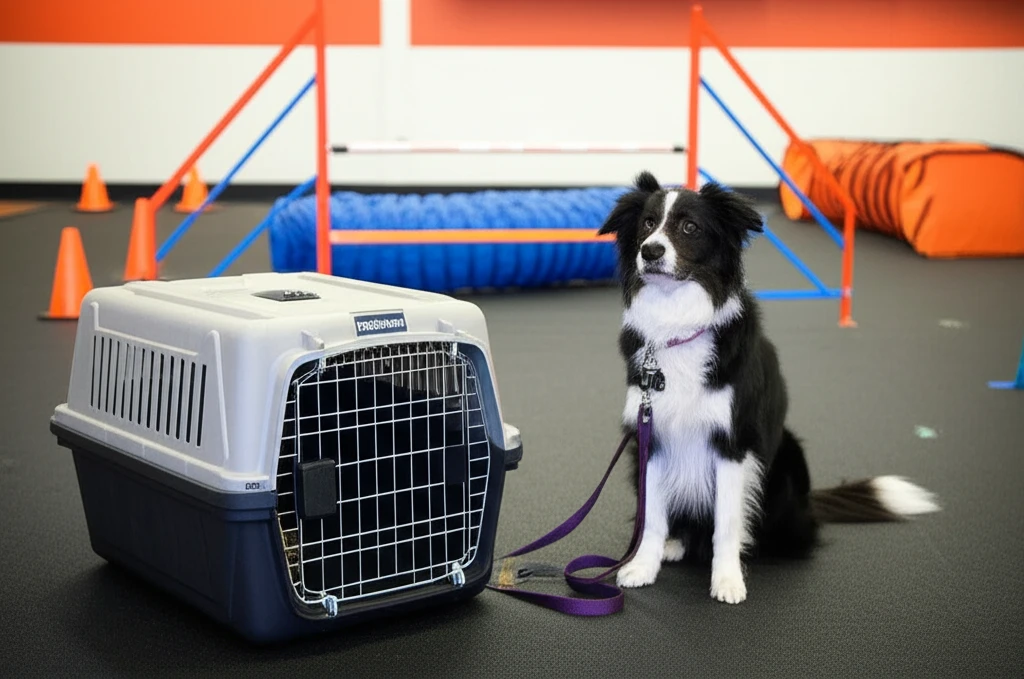
Whichever system you use, introduce it gradually. A dog who has positive associations with their crate at home through reward-based crate training will accept a car crate much more readily than one who has never been in a crate. If you are using a harness, let your dog wear it around the house a few times before clipping them into the car with it. The restraint itself should not be a source of stress.
Building Positive Car Associations from Scratch
If your dog already dreads the car, you need to counter-condition that response before attempting any trip. Start with the car parked in the driveway, engine off. Open the door, toss high-value treats onto the back seat, and let your dog hop in and eat them. Then let them hop out. No pressure, no closing the door, no engine. Repeat this until your dog approaches the car with interest instead of avoidance.
Next, close the door briefly while feeding treats, then open it again. Then sit in the driver's seat with the engine off. Then start the engine without moving. Then drive to the end of the driveway and back. Each step should be boring and predictable for your dog, paired with something they value. A dog who has a history of generalized fear may need more repetitions at each stage, and that is fine.
Once your dog is comfortable with short drives, make the destination something good. Drive to a park, a friend's yard, a pet-friendly store. Break the pattern of car equals unpleasant destination. After enough repetitions where the car predicts good outcomes, the association shifts.
Managing Car Sickness and Anxiety
Car sickness in dogs is common, especially in puppies, and it is usually a combination of motion sensitivity and stress. The inner ear matures as dogs grow, so many puppies who get carsick outgrow it by about a year of age. In the meantime, keep trips short, avoid feeding within two hours of travel, and provide fresh air through a cracked window without letting your dog stick their head out, as debris at highway speed can cause eye injuries.
Anxiety and motion sickness feed each other. A dog who vomited on a car ride now associates the car with nausea, which creates anxiety, which worsens the nausea on the next ride. Breaking this cycle requires the same gradual counter-conditioning described above. If your dog's car sickness is severe, talk to your veterinarian about anti-nausea medication that can take the edge off while you work on building positive associations. The medication buys you time to change the emotional response.
Some dogs do better when they can see out the window. Others do better with a covered crate that limits visual stimulation. Experiment to find what reduces your dog's stress. Face the crate forward rather than sideways, as lateral motion is more disorienting.
Road Trip Essentials: What to Pack and When to Stop
For trips longer than an hour, plan rest stops every two to three hours. Your dog needs to stretch, walk, relieve themselves, and drink water at each stop. Choose rest areas with grass or dirt rather than just concrete, and keep your dog leashed at all stops since rest areas are not fenced and have traffic moving through them.
Pack a go-bag that stays in the car: water and a portable bowl, waste bags, your dog's regular food, any medications, a basic first-aid kit, a copy of vaccination records, an extra leash, and a recent photo of your dog on your phone. If you are traveling to stay somewhere overnight, add their bed, a familiar blanket, and a crate if they use one at home.
Never leave your dog alone in a parked car, even briefly, even with windows cracked. Car interiors reach dangerous temperatures within minutes in warm weather, and dogs cannot cool themselves efficiently through panting alone. If you need to make a stop where your dog cannot come inside, you need a second person to stay with the dog or you skip that stop.
Why Car Comfort Matters Beyond the Drive
A dog who rides well in the car has access to a bigger world. They can come with you to run errands, join you for patio dining across town, visit friends, explore new hiking trails, and travel with you on vacations. A dog who cannot handle the car is limited to their immediate neighborhood for every experience.
Car comfort is also a prerequisite for many training opportunities. Getting to a socialization class, an indoor dog gym, or a new training environment requires a car ride. If the ride itself is stressful, your dog arrives at class already anxious, which undermines the training before it starts.
Investing in car training early, before you need it for a trip, is one of the most practical things you can do for your dog's long-term quality of life. A few weeks of gradual counter-conditioning now pays off for years of easy travel together. Find a Zoom Room near you to build the confidence and crate skills that make car travel smooth.
Frequently Asked Questions
Is it safe for my dog to ride with their head out the window?
No, it is not safe for your dog to ride with their head out the window, despite how much they may seem to enjoy it. Road debris, insects, and particles at highway speeds can cause serious eye injuries, ear infections from wind-driven debris, and inner ear damage. There is also the obvious risk of your dog jumping or falling out of the vehicle. A cracked window that provides airflow without allowing your dog's head to protrude is a safer alternative. If your dog rides in the cargo area, proper ventilation and climate control make open windows unnecessary.
What is the best car restraint for my dog?
A crash-tested crate secured in the cargo area provides the best protection for most dogs. The Center for Pet Safety has tested various restraint systems and found that many harnesses marketed as crash-tested fail under real collision forces. Look for products that have been independently tested by CPS or meet similar standards. For dogs who ride on the back seat, a crash-tested harness like the Sleepypod Clickit is among the few that have performed well in independent testing. Avoid restraints that clip to a collar rather than a harness, as these can cause neck injuries in a crash.
How do I stop my dog from whining or panting excessively in the car?
Excessive whining or panting in the car typically signals anxiety, not misbehavior. Start by ruling out car sickness with your veterinarian. If the issue is anxiety, the solution is gradual desensitization. Go back to basics: sit in the parked car with your dog, engine off, feeding treats. When they are relaxed at that step, add the engine. Then a short drive around the block. Build positive associations at every stage. A calming chew or frozen Kong during the drive can help. If your dog has been anxious in the car for a long time, the counter-conditioning process takes more repetitions, but the approach is the same.
Ready to Hit the Road Together?
Zoom Room's crate training and socialization classes build the confidence your dog needs to ride comfortably and safely. You train alongside your dog in a controlled indoor gym.
Find a Zoom Room