
Impulse Control for Dogs: How to Train Your Dog to Think Before Acting
Your dog launches off the couch when the doorbell rings, inhales treats from your hand like a vacuum, and cannot walk past a squirrel without losing their mind. This is not a personality defect. Impulse control is a learnable skill, and your dog has not been taught it yet.
Why Your Dog Has No Brakes
Impulse control does not come preinstalled. Puppies have virtually none, which is why they bite everything, chase anything that moves, and cannot sit still for more than a few seconds. This is developmentally normal. As dogs mature, they can develop better impulse control, but only if their environment teaches it. A dog who has spent two years being accidentally rewarded for impulsive behavior, by getting attention when they jump, getting access to the yard when they bark, or reaching the interesting thing when they pull, has had two years of practice doing the opposite of what you want.
Some dogs are naturally more impulsive than others, and breed plays a role. High-drive breeds like terriers, herding dogs, and sporting breeds were selectively bred for quick reactions and intense focus on moving targets. That is not a flaw. It is a feature that made them excellent at their original jobs. But in a living room, that same drive manifests as a dog who cannot settle, who reacts to every sound, and who seems to vibrate with energy even after a long walk. The solution is not to suppress the drive. It is to give the dog a framework for channeling it.
The biggest misconception about hyper dogs is that they need more exercise. A tired dog is not a trained dog. If your strategy is to exhaust your dog into calmness with longer runs or more fetch, you are building an athlete who needs even more exercise to reach the same level of fatigue. You are also missing the part of the brain that actually needs the workout: the prefrontal cortex, where decision-making happens. Impulse control is built through mental work, not just physical output.
The Core Exercises
Impulse control training is a collection of small exercises that all teach the same lesson: waiting produces access, and reacting does not. Start with these foundations and practice them daily in short sessions of five to ten minutes.
Leave it. Hold a treat in your closed fist. Your dog will paw, lick, and nose at your hand. Do nothing. The instant they pull their nose away, even slightly, mark it ("yes" or a click) and give them a different treat from your other hand. Notice: they do not get the treat they were mugging. They get rewarded for the moment of disengagement. Once your dog is reliably backing off the closed fist, progress to an open palm, then a treat on the floor covered by your foot, then a treat on the floor uncovered. Each step builds the skill of choosing not to grab something available.
Wait at doors and thresholds. Before opening any door, ask your dog to sit. Open the door an inch. If they break the sit, close the door. Open it again. Repeat until your dog holds the sit while the door swings open. Then release them with a cue like "okay" or "free." This teaches your dog that blasting through a doorway makes the door close, while patience makes it open. It also prevents the chaotic door greetings that so many households struggle with, and it is a safety skill that prevents bolting into traffic.
Settle on a mat. Place a mat or towel on the floor. Reward your dog for any interaction with it: looking at it, stepping on it, lying on it. Shape the behavior until your dog goes to the mat, lies down, and stays. Then build duration. This becomes a portable off-switch. You can bring the mat to a cafe, a friend's house, or a restaurant patio, and your dog has a clear, practiced behavior for "do nothing and relax." It is one of the most useful skills you can teach.
Mental Stimulation Is the Missing Piece
A dog who gets a 45-minute walk every day but no mental challenges is like a person who runs on a treadmill but never reads a book. The body is exercised, but the brain is bored, and bored brains make impulsive decisions. Mental stimulation is what actually tires a dog out in a way that promotes calm behavior.
Food puzzles and enrichment feeders are the easiest entry point. Instead of dumping kibble in a bowl, put it in a Kong, a snuffle mat, a puzzle feeder, or scatter it in the grass. Making your dog work for their food engages their problem-solving circuits and provides 15 to 20 minutes of focused activity that leaves them calmer than a 15-minute game of fetch would.
Training sessions are mental stimulation too. Five minutes of practicing known cues in new combinations, or shaping a new behavior, is cognitively demanding for your dog. Short, frequent training sessions throughout the day are more effective at building impulse control than one long session, because they teach your dog to shift into a working mindset repeatedly.
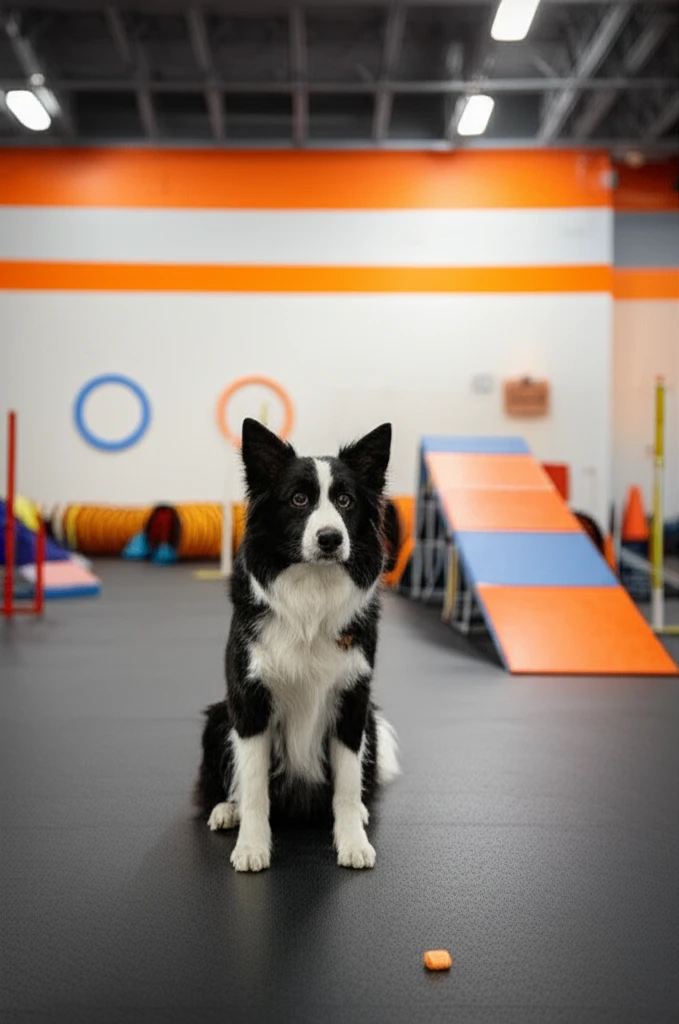
Nose work is another powerful option. Hiding treats around the house or teaching your dog to find a specific scent engages the olfactory system, which uses a massive amount of brain processing power. A 10-minute nose work session can be as tiring for your dog as a 30-minute walk, and it builds the kind of focused, calm engagement that impulsive dogs lack. An indoor training gym is an ideal place to introduce nose work and other structured enrichment activities with professional guidance.
Building Impulse Control Into Everyday Life
The fastest way to build impulse control is to stop giving things away for free. This is not about being harsh or withholding. It is about teaching your dog that calm behavior is the key that unlocks everything they want. Trainers call this "nothing in life is free" or "say please by sitting," and it simply means your dog offers a brief moment of self-control before getting access to rewards they were going to get anyway.
Before meals: your dog sits and waits while you place the bowl, then eats on your release cue. Before going outside: your dog sits at the door and waits for your cue. Before getting the leash clipped on: your dog sits instead of spinning in circles. Before getting a treat: your dog makes eye contact instead of mugging your hand. Before getting on the couch (if allowed): your dog sits and waits for an invitation.
Each of these micro-moments takes three to five seconds and creates a pattern where your dog's default response to wanting something shifts from "do the thing immediately" to "pause and check in with my person." Over days and weeks, this pattern rewires impulse control into your dog's daily behavior without requiring separate training sessions.
The key is consistency across all family members. If one person requires a sit before dinner and another just puts the bowl down, the dog learns that impulse control is optional depending on the audience. Everyone in the household needs to follow the same protocol, and that includes guests. A dog who has practiced these micro-pauses hundreds of times will generalize the skill to new situations, including walking on a leash and handling distractions in public.
When Your Dog Is Over Threshold
There is a difference between a dog who is impulsive and a dog who is over threshold. An impulsive dog makes poor choices because they have not learned better ones yet. An over-threshold dog has been pushed past the point where learning is possible. Their stress hormones are elevated, their thinking brain has gone offline, and they are operating on pure reaction. No amount of cue-giving will reach a dog in that state.
Recognizing when your dog is approaching threshold is critical. Signs include: inability to take treats (a dog who normally loves food but is ignoring treats is not being picky, they are stressed), fixated staring, panting with a tightly closed mouth, whale eyes, excessive lip licking, and an inability to respond to known cues. When you see these signs, your dog needs distance from whatever is triggering them, not more practice. Move away, let them decompress, and try again at a lower intensity later.
This is especially important for dogs who react to triggers like doorbells, other dogs, or strangers. Flooding a reactive or over-aroused dog with more of the thing that is overwhelming them does not build impulse control. It builds panic. The skill is in managing the environment so your dog stays in a mental state where they can actually learn. That is what structured training environments are designed for.
At Zoom Room's socialization classes, trainers manage the difficulty level so your dog practices impulse control at their threshold, not past it. You learn to read your dog's stress signals and adjust in real time. Find a Zoom Room near you to start building the impulse control skills that make everyday life with your dog calmer and more enjoyable.
Frequently Asked Questions
My dog is hyper after walks. Does that mean they need more exercise?
Usually the opposite. A dog who comes home from a walk and zooms around the house is often overstimulated, not under-exercised. More physical exercise in that state just builds stamina and arousal, making the problem worse over time. What these dogs need is more mental stimulation and structured calm-down time. After walks, give your dog a food puzzle or chew and practice a settle on their mat. Teaching your dog to transition from activity to rest is an impulse control skill in itself. If the hyperactivity persists regardless of exercise or enrichment, consult a trainer or veterinarian to rule out anxiety.
At what age can I start teaching impulse control?
You can start simple impulse control exercises as soon as you bring a puppy home, typically around eight weeks. At that age, the exercises are very basic: waiting a second before eating, sitting before getting picked up, pausing before going through a door. Keep sessions extremely short, under two minutes, and keep expectations low. Puppies have developing brains with very limited self-regulation capacity. As your puppy grows, you can increase the duration and difficulty. By four to six months, most puppies can handle structured leave-it exercises and longer waits. Impulse control continues to develop into social maturity, around two to three years depending on breed.
Why does my dog have impulse control at home but not in public?
This is a generalization problem. Your dog has learned impulse control in one context, your home, where distractions are low and the environment is familiar. In public, the smells, sounds, movement, and presence of other dogs and people raise the difficulty level dramatically. Dogs do not automatically transfer skills from one setting to another. You need to practice impulse control exercises in progressively more distracting environments, increasing difficulty gradually. Start in your yard, then a quiet park, then a busier location. At each new level, lower your criteria and increase your reinforcement rate until your dog adjusts.
Ready to Build Your Dog's Self-Control?
Zoom Room's obedience and socialization classes teach impulse control in a structured environment where distractions are managed and your dog can practice at the right difficulty level. You train alongside your dog with real-time coaching.
Find a Zoom Room