
Scent Work for Dogs: The Most Accessible Enrichment Activity You Are Not Doing
Every dog on earth already knows how to do scent work. They have 300 million olfactory receptors and a brain wired to process smell in extraordinary detail. What they need is an outlet. What you need is to stop underestimating what your dog's nose can do.
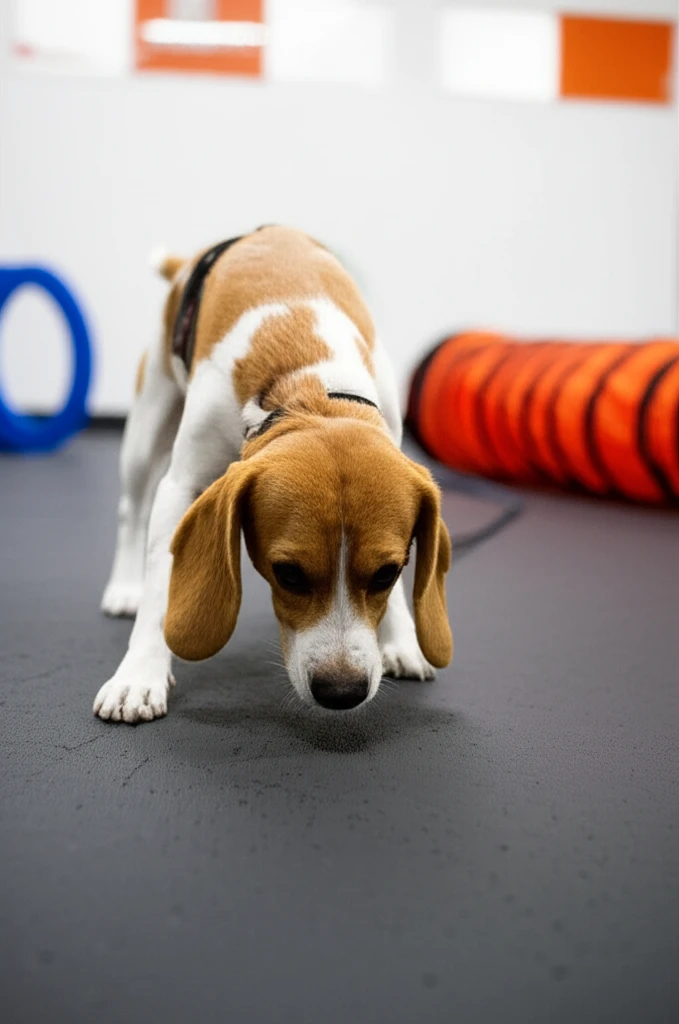
Why Scent Work Matters More Than You Think
When your dog sniffs a fire hydrant for the third time on your morning walk and you tug the leash to keep moving, you are interrupting the most sophisticated information-processing system in the animal kingdom. Your dog's nose is not just smelling. It is reading: who was here, when they were here, what they ate, whether they were stressed, and which direction they went. Each nostril functions independently, allowing your dog to detect scent gradients and determine the direction of a scent source. The portion of a dog's brain dedicated to analyzing smells is proportionally 40 times larger than yours.
And yet most pet dogs spend their lives in olfactory boredom. They walk the same routes, eat from the same bowls, and live in a sanitized indoor environment that offers almost nothing for their primary sense. Scent work changes that. It gives your dog a job that uses the part of their brain they were built to use, and the effect on behavior is remarkable.
A 10-minute scent work session is mentally equivalent to a 30-minute walk. Dogs who finish a search are visibly calmer, more settled, and less likely to engage in nuisance behaviors driven by boredom. This is not anecdotal. Scent work engages the parasympathetic nervous system, which promotes relaxation. Sniffing literally lowers your dog's heart rate and stress hormones. That is why enrichment experts consider scent work the single highest-value mental stimulation activity for dogs.
Getting Started at Home
You do not need any special equipment to start scent work. You need treats, a few cardboard boxes, and ten minutes.
Step one: box searches. Set up five to ten cardboard boxes or containers in a room. Place a few high-value treats in two or three of the boxes. Bring your dog into the room and say "find it" or "search" as a starting cue. Let your dog investigate. When they find a treat box, let them eat the reward. That is it. You are letting your dog do what they already know how to do: follow their nose to food. Keep the first sessions short, three to five minutes, and end while your dog is still engaged and successful.
Step two: room searches. Once your dog is confidently searching boxes, move to hiding treats around a room without boxes. Place them behind furniture legs, on low shelves, under the edge of a rug, and behind doors. Increase difficulty gradually by hiding treats higher (on a chair seat, on a windowsill) and in less obvious locations. Your dog will develop a systematic search pattern over time, working the edges of the room and then moving inward.
Step three: outdoor searches. Take the game outside. Scatter treats in a small area of grass and let your dog find them. Or hide treats along a fence line, on patio furniture, or in garden pots. Outdoor searches are harder because competing scents from the environment make isolating the target scent more challenging. This is a natural difficulty progression that keeps the activity enriching as your dog improves.
Throughout all of this, your job is to do as little as possible. Do not point at hiding spots. Do not guide your dog. Let them work the problem. The confidence that comes from independent problem-solving is a huge part of scent work's value.
Why Scent Work Is Ideal for Reactive, Fearful, and Senior Dogs
Most dog sports and enrichment activities have prerequisites: physical fitness, sociability, a baseline level of confidence around other dogs or novel environments. Scent work has almost none. It is the great equalizer.
Fearful dogs who shut down in group settings often come alive during scent work because the activity is self-directed and non-confrontational. There is no handler looming over them, no other dogs invading their space, no loud noises or sudden movements. It is just their nose, a room, and hidden rewards. The confidence they build from successfully searching an environment transfers to other contexts. A dog who has learned that novel rooms contain hidden good things is a dog who starts to approach new spaces with curiosity rather than apprehension.
Reactive dogs benefit because scent work provides an outlet for mental energy that does not involve other dogs. Many reactive dogs are also under-stimulated, and the frustration of unmet mental needs feeds into their reactivity. Adding regular scent work sessions gives these dogs a constructive focus and reduces the overall arousal level that makes reactions more likely. In structured scent work classes, dogs work one at a time while others wait in crates or cars, making it one of the few group activities where dog-reactive dogs can safely participate.
Senior dogs and dogs with physical limitations thrive in scent work because the physical demands are minimal. A dog who can no longer run, jump, or handle long walks can still search a room. Their nose does not age the way their joints do. Scent work gives older dogs purpose and mental engagement that keeps cognitive decline at bay, similar to how puzzles and mental challenges support brain health in aging humans.
Dogs of any breed excel at scent work, from scent hounds like Beagles who were literally bred for this to flat-faced breeds who may struggle with high-impact sports. If your dog has a nose, they can do scent work.
From Kitchen Searches to Competition
If your dog enjoys scent work at home, there is a structured pathway that can take you from hiding treats in boxes to competing in organized trials.
K9 Nose Work, developed by professional detection dog handlers, is designed specifically for pet dogs. The program starts with food-based searches and progresses to odor detection using birch, anise, and clove essential oils. Classes follow a specific methodology where dogs work one at a time, making it accessible for dogs who are not comfortable in group settings. The National Association of Canine Scent Work (NACSW) sanctions trials at multiple levels.
AKC Scent Work is the American Kennel Club's competition program. Dogs search for cotton swabs saturated with target odors in four search elements: containers, interiors, exteriors, and buried. There are multiple levels of difficulty, from Novice through Detective. Both purebred and mixed-breed dogs can compete through the AKC's Canine Partners program.
You do not have to compete to benefit from structured scent work training. But the progression from food searches to odor detection adds complexity that keeps the activity enriching for experienced dogs. A dog who has mastered finding treats in your living room will be bored by it after a few months. Transitioning to target odors opens up a new level of challenge. Impulse control naturally develops through scent work as your dog learns to indicate a find rather than simply diving in to grab the reward.
Scent Work Classes: What to Expect
In a scent work class, dogs typically work one at a time while other teams wait nearby or in a separate area. The instructor sets up search areas with hidden odor or treats, and each dog-handler team gets a turn to work the problem. The instructor coaches you on reading your dog's body language: the head snap when they catch a scent, the change in breathing pattern, the shift in tail carriage, and the final indication behavior at the source.
Learning to read your dog is one of the most valuable parts of scent work training. Your dog already knows how to find the odor. What you are learning is how to recognize when they have found it, and how to stay out of their way while they work. Most handlers are surprised by how much they unconsciously influence their dog's search pattern through their own movement and body language. A good instructor will teach you to be a neutral observer, letting your dog lead.
Zoom Room offers scent work classes in a controlled indoor environment where search areas can be customized for difficulty and distraction level. Because the space is climate-controlled and free from weather variables, scent behaves consistently, which is ideal for building foundational skills. You work alongside your dog, learning to read their alerts and building the handler skills that make you a better team in any context.
Whether you are looking for a calming activity for a reactive dog, a low-impact sport for a senior, or simply the most efficient way to tire out a high-energy dog, scent work delivers. It is the one enrichment activity that every dog can do, every dog enjoys, and every household benefits from. Explore Zoom Room's scent work classes and discover what your dog's nose has been waiting for. Find a Zoom Room near you to get started.
Frequently Asked Questions
What age can a dog start scent work?
Puppies can start simple scent games as early as eight weeks old. At that age, keep it basic: scatter a few treats on the floor and let them find the food. As your puppy grows, gradually increase the difficulty by hiding treats in boxes, behind objects, and eventually in different rooms. Formal odor detection training typically starts around six months to a year, when the dog has enough focus and impulse control to work a search systematically. There is no upper age limit. Senior dogs can start scent work at any age and benefit enormously from the mental stimulation.
Do certain breeds do better at scent work than others?
All dogs have extraordinary scent capabilities compared to humans, and any breed can excel at scent work. Scent hounds like Beagles, Bloodhounds, and Basset Hounds have a natural advantage in raw olfactory power, but that does not mean other breeds cannot compete at the highest levels. Sporting breeds, herding breeds, terriers, and mixed breeds all do well. What matters more than breed is the individual dog's motivation and the handler's ability to read their dog. In competition, you will see every breed imaginable succeeding because the activity taps into something universal across all dogs.
How is scent work different from just letting my dog sniff on walks?
Letting your dog sniff on walks is valuable and you should do more of it. But structured scent work adds a problem-solving element that casual sniffing does not provide. In scent work, your dog has a specific target to locate in an unfamiliar search area. They need to develop a search strategy, discriminate the target scent from background odors, and communicate the find to you. This focused task engages deeper cognitive processing than general environmental sniffing. Think of it as the difference between browsing a bookstore and solving a specific research question. Both involve reading, but one requires significantly more mental effort.
Ready to Put Your Dog's Nose to Work?
Zoom Room's scent work classes teach you and your dog the foundations of nose work in a controlled indoor environment. Whether you have a reactive dog, a senior, or a high-energy puppy, scent work is the enrichment activity that works for every dog.
Find a Zoom Room