
How to Train a Beagle (Hint: Their Nose Is Running the Show)
A Beagle's nose contains roughly 220 million scent receptors. Yours has about 5 million. When your Beagle ignores your recall cue to follow a trail across the park, they're not being defiant -- they're processing a world of information you can't even detect. Training a Beagle means learning to work with that nose, not pretend it doesn't exist.
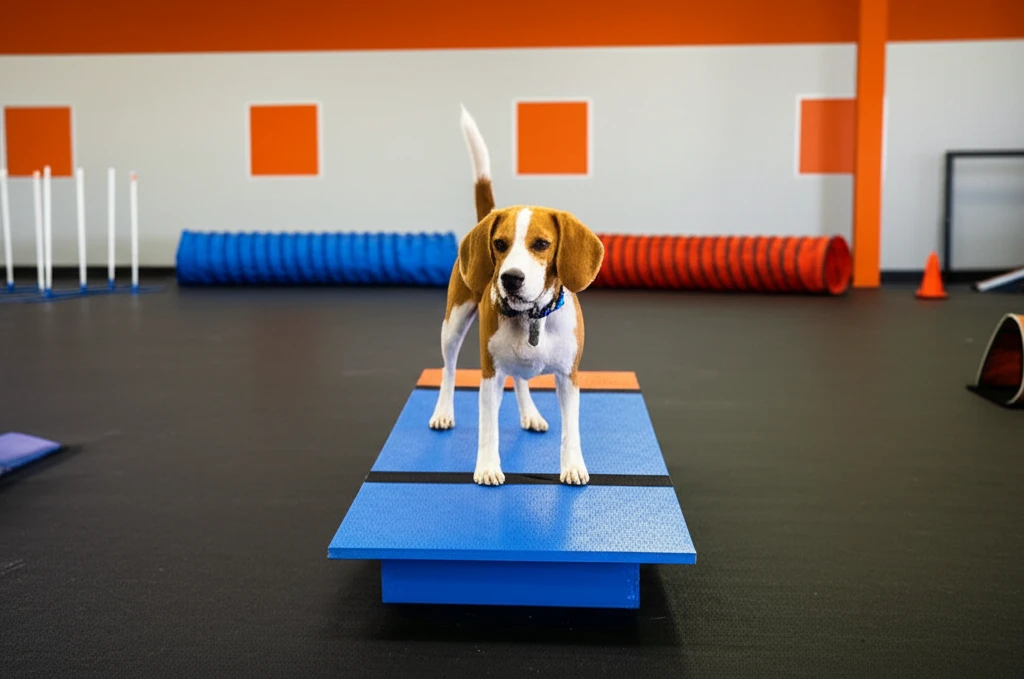
What Makes Beagles Different to Train
Beagles are scent hounds, and that single fact explains most of what you need to know about training them. They were bred to track game for hours, following a scent trail with single-minded focus while making independent decisions about which direction to follow. That breeding produced a dog who is curious, persistent, food-driven, and -- here's the part that frustrates new owners -- independently minded.
When people call Beagles "stubborn," what they usually mean is "my Beagle doesn't respond the way a Golden Retriever would." That's accurate, but it's not stubbornness. It's a breed that was never designed to check in with a handler for every decision. A retriever looks to you for guidance. A Beagle gathers information from the environment and acts on it. Positive reinforcement training works with this independence rather than fighting it, by making you the most interesting thing in the environment -- which, when you're competing with 220 million scent receptors, requires some creativity.
The good news is that Beagles are one of the most food-motivated breeds alive. Their relationship with food is not casual. It is passionate, unwavering, and extremely useful for training purposes. When the right treat appears, a Beagle's attention narrows to you with an intensity that surprises people who assumed the breed couldn't focus. They can focus. They just need a reason.
Beagles are also pack-oriented dogs. They were bred to hunt in groups, and they're genuinely social -- with people, with other dogs, with children. This sociability makes them generally easy-going in group settings and responsive to socialization, even if their attention occasionally wanders toward whatever interesting smell just wafted through the room.
Use the Nose, Don't Fight the Nose
The single biggest mistake Beagle owners make is treating the nose as an obstacle to training. It's not. It's the key.
Scent work -- structured activities where your dog uses their nose to locate hidden treats, essential oils, or specific target odors -- is the most effective training tool available for this breed. It engages the part of the brain that's already running at full capacity, channels it into a productive activity, and tires your Beagle out in a way that physical exercise alone never will.
A 20-minute scent work session will leave your Beagle more satisfied than an hour of walking, because it's using the hardware they were designed to run. Structured nose work classes take this further by adding complexity, building search patterns, and teaching your Beagle to communicate when they've found the target -- skills that deepen the bond between you while respecting the breed's fundamental nature.
You can also use scent strategically in everyday training. Hide treats around the house for your Beagle to find. Use scent trails to practice recall -- lay a trail of treats leading to you, and reward generously when they arrive. Turn the nose into a tool for engagement rather than a source of distraction.
Where Beagles Typically Need Work
- Recall. This is the big one. A Beagle who catches a scent becomes temporarily deaf to everything else. Building a reliable recall requires high-value rewards, consistent practice, and the realistic understanding that off-leash recall in an unfenced area may never be 100% reliable with this breed. Management (long lines, fenced areas) is part of the plan, not a failure.
- Barking and baying. Beagles are vocal. They bark, they howl, they bay -- and the bay carries. Teaching a "quiet" cue is possible, but expecting silence from a Beagle is like expecting a retriever not to carry things. You can manage the volume; you can't eliminate the instinct.
- Counter-surfing and food theft. Beagles are driven by food and clever enough to find it. They'll learn to open cabinets, knock over trash cans, and clear a counter with surgical efficiency. Management (childproof locks, secured trash, nothing left on counters) is essential alongside training.
- Pulling on leash. Every walk is a scent buffet, and your Beagle wants to sample everything. Loose-leash walking requires rewarding the choice to walk beside you rather than nose-down at full speed. Allow some sniffing time -- it's enriching and necessary -- but teach the difference between "go sniff" and "walk with me."
- Digging. Some Beagles dig enthusiastically, especially if they detect something interesting underground. Providing a designated digging area and redirecting the behavior is more effective than trying to stop it entirely.
What Actually Works
Pay well. Standard training treats won't cut it with a Beagle -- not because they're spoiled, but because the competing scent environment is so rich that your reward needs to outcompete whatever they were just smelling. Use high-value treats: real chicken, cheese, freeze-dried liver. When your Beagle discovers that paying attention to you produces better food than the ground does, you'll see a different dog.
Keep sessions short and varied. Beagles bore quickly with repetition. Five to ten minutes of focused work is better than thirty minutes of declining attention. Vary the cues, change the location, mix in scent games between obedience reps. A Beagle who doesn't know what's coming next stays engaged longer.
Build recall in stages. Start indoors with zero distractions. Then a fenced yard. Then a quiet outdoor area on a long line. Increase difficulty gradually, and never punish a Beagle for a slow recall -- if coming to you ever predicts something negative, the already-tenuous recall vanishes entirely. Every recall should end in a jackpot.
Use "go sniff" as a reward. Permission to sniff is one of the most powerful reinforcers you have with a Beagle. Walk politely for 30 seconds, then "go sniff" -- a release to investigate whatever trail they've been eyeing. You're using the breed's strongest drive as a training tool instead of fighting it. Early socialization that includes exposure to varied scent environments builds a more confident, adaptable sniffer.
Manage what you can't train. With Beagles, management isn't a sign of incomplete training -- it's part of responsible ownership. Secure your trash. Use baby gates. Don't leave food on the counter. Keep your Beagle on a leash or long line in unfenced areas. These aren't failures. They're accommodations for a dog whose nose will always be more powerful than their impulse control around food.
The Bigger Picture
Training a Beagle requires adjusting your expectations, not lowering them. A well-trained Beagle won't behave like a well-trained Border Collie -- they'll behave like a well-trained Beagle, which means responsive to cues, reliable in familiar contexts, food-motivated in perpetuity, and occasionally distracted by a scent trail that's more compelling than anything you're offering. That's not a flaw. That's the breed.
The Beagle owner who thrives is the one who finds the nose charming rather than frustrating, who sees food motivation as a gift rather than a problem, and who understands that an independent dog isn't a disobedient dog -- they're a dog who needs a slightly more creative training approach.
Group classes work well for Beagles because the social environment keeps them engaged, the structured format prevents sessions from dragging on too long, and the presence of other dogs satisfies their pack instincts. Scent work classes, in particular, are transformative for this breed -- they turn the Beagle's greatest "liability" into their greatest talent, and watching a Beagle work a scent problem is one of the most satisfying things in dog training.
Frequently Asked Questions
Can Beagles ever be trusted off-leash?
Beagles can develop solid recall in low-distraction environments, but their scent drive means off-leash reliability in unfenced areas is always a work in progress. A strong scent trail can override even well-trained recall. The safest approach is to use fenced areas and long lines for off-leash exercise, and to build recall gradually with extremely high-value rewards. Many Beagle owners find that a 30-foot long line gives their dog freedom to explore while maintaining a safety net. This is smart management, not a training failure.
Why does my Beagle bark and howl so much?
Beagles were bred to vocalize while tracking game so hunters could follow their progress. That instinct is deeply wired. You can teach a "quiet" cue by rewarding silence during moments when your Beagle would normally vocalize, and you can reduce triggers by managing their environment. But expecting a completely silent Beagle isn't realistic. The goal is to bring the volume to a manageable level and teach your Beagle that quiet behavior earns rewards, while accepting that some vocalization is simply part of the breed.
What types of classes are best for Beagles?
Scent work classes are the standout choice for Beagles because they channel the breed's strongest natural ability into a structured activity. Beagles also do well in group obedience classes where the social environment and varied distractions keep them engaged. Agility can be a great option too, since it combines physical exercise with mental problem-solving. The best class for any individual Beagle is one that keeps sessions short, uses high-value food rewards, and provides variety to prevent boredom.
Put That Nose to Work
Beagles thrive in scent work and group training. Our classes turn their strongest instinct into their best skill.
Find a Zoom Room