
Dog Agility for Beginners: Why Any Dog Can Benefit from Agility Training
You have seen the Border Collies flying through agility courses on TV and thought "my dog could never do that." You are probably right about the flying part. But the benefits of agility have nothing to do with speed, and everything to do with building a better relationship between you and your dog.
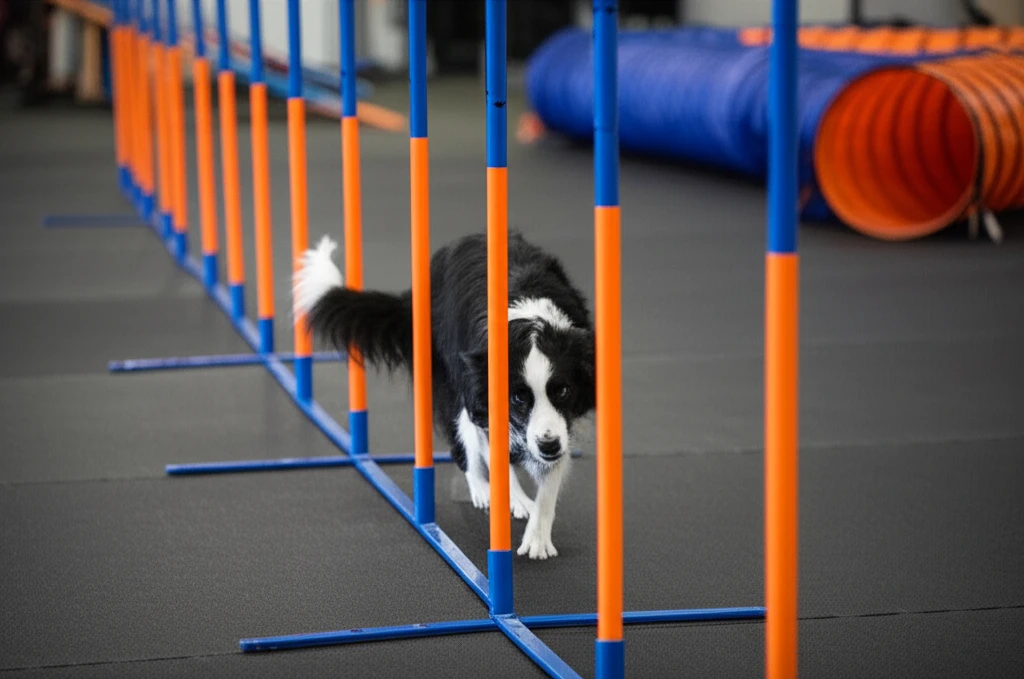
Agility Is Not What You Think It Is
When most people picture dog agility, they see a sleek Border Collie rocketing through weave poles at a national championship. That image, while impressive, has done a disservice to the sport by making it seem like agility is only for certain dogs with certain athleticism and certain handlers with certain experience levels. In reality, agility is one of the most inclusive and adaptable dog activities available.
At its core, agility is communication. You guide your dog through a sequence of obstacles: jumps, tunnels, weave poles, an A-frame, a teeter-totter, a dog walk (an elevated plank), and a pause table. Your dog does not know the course. You do. Your job is to communicate the path through body position, motion, and verbal cues. Your dog's job is to read you and respond. The speed at which this happens is entirely adjustable.
Beginner agility is slow, methodical, and focused on building foundational skills. Your dog learns to follow your movement, take individual obstacles on cue, and develop body awareness. You learn to communicate clearly, time your cues, and position yourself so your dog can succeed. The result is a deeper working relationship that transfers to everything else you do together, from loose-leash walking to recall in the park.
What Your Dog Gains from Agility
Confidence. A dog who learns to navigate a wobbly teeter-totter, walk across an elevated plank, and charge through a dark tunnel develops confidence that generalizes to the rest of their life. Dogs who were previously hesitant about new surfaces, sounds, or environments often become noticeably bolder after a few weeks of agility training. The obstacle course teaches them that unfamiliar things are not scary, they are opportunities for reinforcement.
Body awareness. Most pet dogs have poor proprioception, meaning they do not have great awareness of where their body is in space. They trip over their own feet, misjudge jumps, and barrel into things. Agility develops proprioception by asking your dog to navigate precise physical challenges: stepping onto a narrow plank, weaving through poles, adjusting stride length for jumps. This improved body awareness reduces injury risk in everyday life and is especially valuable for growing puppies and aging dogs.
Impulse control. Agility looks fast, but it requires tremendous impulse control. Your dog needs to wait at the start line, take obstacles in sequence rather than freelancing, and stop on the pause table. A dog blasting through a course without listening to the handler is not doing agility. They are doing zoomies with props. Real agility demands that your dog check in with you, respond to directional cues, and regulate their own speed and arousal, all of which are impulse control skills that improve behavior outside the ring.
Mental stimulation. Agility is enrichment in its purest form: a novel environment, physical problem-solving, handler communication, and reinforcement for making good choices. A single 45-minute agility class provides more mental stimulation than most dogs get in an entire day. Dogs who do regular agility are noticeably calmer and better-behaved at home because their brains are getting the workout they need.
What to Expect in a Beginner Class
A good beginner agility class spends the first several sessions not on the agility course at all. You will work on foundation skills: teaching your dog to follow your body movement, introducing a hand target, building a start-line stay, and practicing basic handling mechanics. These fundamentals make everything that follows easier and safer.
When equipment is introduced, it is gradual and low-stress. Jumps start at their lowest height or with the bar on the ground. Tunnels are compressed to their shortest length so your dog can see the exit. The teeter-totter is introduced as a flat board on the ground, then slightly elevated at one end, then at full height over multiple sessions. Contact obstacles (the A-frame, dog walk, and teeter) are taught with specific contact zones where your dog must place their paws, which builds the careful foot placement that prevents injuries at speed later on.
Class sizes are typically small, around four to eight dogs, and teams take turns on equipment while others practice foundation skills or settle on the sideline. This turn-taking structure is itself a socialization exercise: your dog learns to be calm and focused in the presence of other dogs working nearby. The instructor will help you with timing, body position, and reading your dog's comfort level so you both progress at the right pace.
You do not need to bring any equipment or previous training experience. A solid recall and basic leash manners are helpful but not required. Most importantly, bring high-value treats and a willingness to make mistakes. You will fumble your handling, cue the wrong obstacle, and trip over your own feet. So will everyone else in the class. That is part of the process.
Breed Considerations and Physical Safety
Any dog can participate in agility at an appropriate level. That said, certain physical considerations determine what "appropriate" looks like for your individual dog.
Brachycephalic breeds (Bulldogs, Pugs, French Bulldogs, Boston Terriers) have compromised airways that limit their ability to sustain intense physical activity, especially in warm conditions. These dogs can absolutely do agility, but at a slower pace, with lower jump heights, and with close attention to breathing effort. An indoor, climate-controlled training environment is ideal for these breeds because temperature and humidity are managed.
Long-backed breeds (Dachshunds, Corgis, Basset Hounds) need modified jump heights and careful attention to obstacles that stress the spine. The teeter-totter and A-frame require special consideration. A good instructor will adjust equipment settings and course design for these dogs.
Giant breeds (Great Danes, Mastiffs, Saint Bernards) mature slowly and should not do high-impact jumping until their growth plates close, typically between 18 and 24 months. Puppies of any large breed should stick to low or no-jump foundation work until cleared by a veterinarian. Even as adults, giant breeds benefit from lower jump heights to protect their joints.
Puppies under one year should avoid repetitive jumping and high-impact activities. Foundation agility, which focuses on body awareness, handler communication, tunnels, and ground-level work, is appropriate and beneficial. This builds the skills and confidence they will need when full equipment is introduced later.
If your dog has any orthopedic conditions, recent injuries, or chronic pain, consult your veterinarian before starting agility. Many dogs with managed conditions can participate safely with modifications, but a professional evaluation ensures you are not asking your dog to do something that will hurt them.
Beyond the Backyard: Why Class Matters
You can set up a few agility obstacles in your backyard, and that can be fun. But there are specific reasons why taking a class produces better results than practicing alone.
First, professional equipment is safer. Agility obstacles designed for training facilities have non-slip surfaces, adjustable heights, proper contact zones, and stability that DIY setups often lack. A wobbly homemade teeter-totter or a tunnel that collapses while your dog is inside can create fear that takes months to undo.
Second, an instructor watches what you cannot see. When you are running a course, you are focused on where you are going, not on what your dog's body is doing. An instructor can spot a dog who is landing awkwardly, compensating for discomfort, or showing stress signals that you missed because you were looking at the next obstacle.
Third, the presence of other dogs is the point, not the problem. Agility in a group setting is one of the best socialization activities because your dog learns to work in proximity to other dogs without direct interaction. They practice focus and impulse control in a stimulating environment, which builds the kind of real-world reliability that backyard practice cannot replicate.
Zoom Room's agility classes are held in indoor facilities with professional-grade equipment, climate control, and small class sizes. You work alongside your dog, with an instructor guiding your handling in real time. Whether you are looking for a fun enrichment activity, a way to build your dog's confidence, or a pathway to competition, it starts with a beginner class and a willingness to try something new. Explore Zoom Room's agility classes and find out what you and your dog can do together. Find a Zoom Room near you.
Frequently Asked Questions
Is my dog too old to start agility?
Probably not. Dogs of any age can participate in agility at an appropriate level. For senior dogs, this means lower jump heights, slower speeds, and a focus on body awareness rather than competition-level performance. Many older dogs thrive in agility because it provides mental stimulation, gentle physical exercise, and a job to do. If your dog can walk comfortably and has no acute pain or mobility issues, they can likely participate in a modified agility program. A veterinary check before starting is always a good idea for older dogs to identify any physical limitations that should inform the training plan.
Does my dog need to know obedience before starting agility?
Not necessarily. A reliable recall and a basic sit are helpful for safety and start-line stays, but most beginner agility classes build these skills as part of the curriculum. If your dog has never taken any training class, agility can be a great first experience because it is inherently more engaging for many dogs than traditional obedience drills. The obstacle work provides built-in motivation that makes training feel like play. Some facilities offer a foundations class that covers both basic manners and agility-specific skills for dogs who are starting from scratch.
Can small dogs do agility?
Absolutely. Small dogs are well represented in agility at every level, from casual classes to national competition. Jump heights are adjusted based on your dog's size, so a Chihuahua is not jumping the same height as a Labrador. Tunnels, weave poles, and contact equipment are all navigable by small dogs. In fact, many small breeds like Papillons, Shetland Sheepdogs, and Jack Russell Terriers are among the most successful agility dogs in competition. If your small dog has the physical ability to walk, trot, and jump a low bar, they can do agility.
Ready to Try Agility?
Zoom Room's beginner agility classes are designed for dogs of all breeds, sizes, and experience levels. You train alongside your dog on professional equipment in a climate-controlled indoor gym, with an instructor coaching every step.
Find a Zoom Room