
Therapy Dog Training
Therapy dogs visit hospitals, nursing homes, hospices, VA centers, schools, and rehabilitation facilities to provide comfort to people who need it. Unlike service dogs, therapy dogs are family pets -- they live with you and make visits on a volunteer basis.
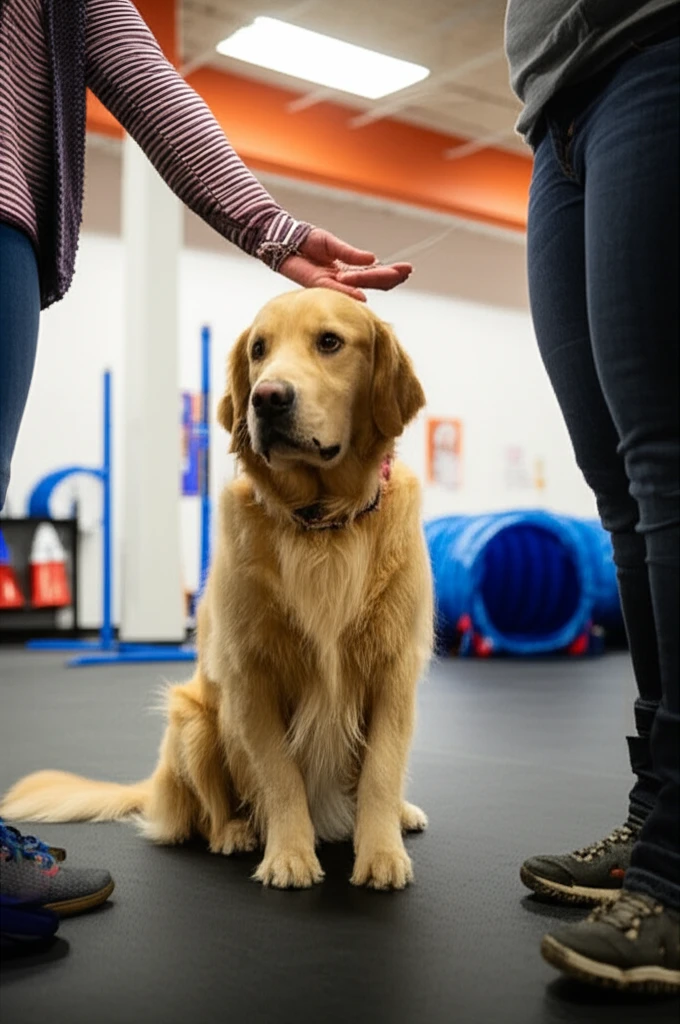
What Therapy Dog Training Covers
Any breed can become a therapy dog. The only requirement is that the dog be an adult (not a puppy) with no aggression issues toward humans or other dogs.
Therapy dogs need three skill sets:
Solid obedience. Reliable sits, downs, stays, and recalls form the foundation. A therapy dog must respond to cues even in distracting environments.
Calm around medical equipment. This is the specialized part. Many dogs are nervous around anything with wheels--wheelchairs, gurneys, IV poles. Therapy dogs must navigate these calmly without barking, chasing, or shying away. They need to be comfortable with rolling wheelchairs, IV tubing, beeping monitors, and the general unpredictability of medical settings.
Therapy Dogs vs. Service Dogs
These are different things.
Service dogs receive highly specialized training to assist specific individuals--guiding the visually impaired, alerting deaf handlers, or detecting seizures before they occur. They are paired with one person and have legal access rights under the ADA.
Therapy dogs are family pets who volunteer. They aren't paired with a specific individual or institution. You make arrangements to visit facilities, and your dog provides comfort to many different people.
Where Therapy Dogs Work
The list is long: children's hospitals, hospices, nursing homes, VA hospitals, Alzheimer's facilities, rehabilitation centers, courtrooms, schools, and programs where children read aloud to dogs (the non-judgmental audience helps struggling readers build confidence).
Certification and Registration
Most facilities require therapy dogs to be registered with a recognized organization before visiting. Three of the largest national organizations are Pet Partners, Therapy Dogs International, and Alliance of Therapy Dogs. All three operate in all 50 states.
Registration typically requires:
- Completion of a handler course
- A team evaluation assessing both handler and dog
- Proof of current vaccinations
- Liability coverage (often provided through the organization)
Prerequisites
Dogs should pass the AKC Canine Good Citizen test (or equivalent) before beginning therapy-specific training. If a dog has aggression issues, those need to be addressed through obedience work first.
The Six-Week Workshop
Therapy dog training is typically a six-week course that builds on existing obedience skills. The curriculum includes:
- Desensitization to wheelchairs, walkers, and crutches
- Comfort around IV poles and medical tubing
- Handling unusual sounds (beeping, alarms, PA systems)
- Tricks for engagement and entertainment
- Practice with distractions like flowing fabric, hats, and unexpected movements
- Handler skills for managing visits and reading your dog's stress signals
By the end, teams are prepared to take the temperament evaluation required by therapy dog organizations.
Frequently Asked Questions
Can any breed become a therapy dog?
Yes. There are no breed restrictions for therapy dog work. Golden Retrievers and Labrador Retrievers are common choices, but small breeds, mixed breeds, and breeds that sometimes face public perception challenges all serve successfully as therapy dogs. What matters is the individual dog's temperament: they need to be calm, friendly, comfortable being handled by strangers, and able to stay relaxed in unfamiliar environments. A well-trained Chihuahua who loves people can be just as effective a therapy dog as a Golden Retriever.
How long does it take to train a therapy dog from start to finish?
The timeline depends on where your dog is starting. A dog who already has solid obedience and a calm temperament can complete a six-week therapy dog workshop and be ready for evaluation. A dog who still needs basic obedience training should plan on completing that first, which typically takes one to two sessions of group classes. From start to finish, most teams are visiting facilities within three to six months. The process includes obedience training, the CGC test, the therapy dog workshop, registration with a therapy dog organization, and a team evaluation.
What is the difference between a therapy dog and an emotional support animal?
A therapy dog is trained to provide comfort to many people in institutional settings like hospitals, schools, and nursing homes. The handler volunteers their time and arranges visits with facilities. An emotional support animal (ESA) provides comfort to its owner through companionship and does not require specialized training. ESAs may have certain housing accommodations but do not have public access rights. Therapy dogs go through formal training and evaluation, are registered with a recognized organization, and work with their handlers as a certified team.
Ready to get started?
Find your nearest Zoom Room and learn about our therapy dog program.
Find a Zoom Room